

A decades-old murder mystery from 1979 has taken a major turn after a New Jersey college DNA team identified the victim.
The remains were originally found in a shallow grave in a wooded section of Quinton Township, Salem County, about 41 miles from Philadelphia. Authorities said the victim had been shot in the head and was believed to have died during the winter of 1978–1979.

The victim has now been identified as Robert Dean Irelan through efforts by the Ramapo College Investigative Genetic Genealogy Center. Using advanced DNA analysis, researchers traced family connections that helped solve the identity of the long-unidentified victim.
Case manager Tracie Boyle said investigators focused on links to South Jersey, particularly the Atlantic City area, which helped lead to a breakthrough.
With the victim now identified, New Jersey State Police are continuing their hunt for Irelan’s killer. Investigators have spoken with his relatives and are urging anyone with information to come forward. Boyle said they hope the public can provide tips that may help uncover who was responsible.
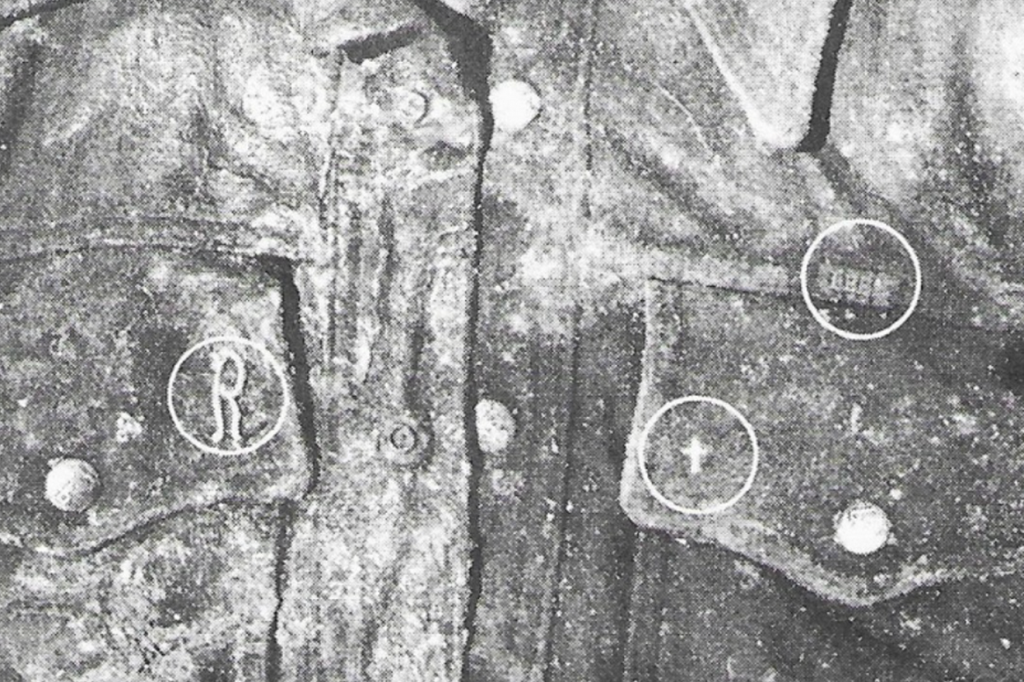
When Irelan’s body was discovered, he was wearing white painter’s pants, a plaid cotton shirt, Pro-Keds sneakers, and a distinctive blue Lee jacket decorated with a gold-plated “R” and a small gold cross. He was also wearing a black-and-white pullover sweater.
Police say Irelan lived in Pleasantville and often spent time in Atlantic City. The case was reopened in March 2023, with researchers using genealogy databases and family tree reconstruction to identify him. Boyle explained that investigators analyzed DNA matches and traced relatives’ family trees in search of shared ancestors.
Before the identification, authorities had released a composite sketch of the victim. Eventually, a photograph of Irelan, believed to have been in his late teens or early twenties at the time of his death, was confirmed as a match.
Local resident Herbert Ladner, who remembers when the case first surfaced, said the community appreciates how genetic technology is helping bring answers in long-unsolved crimes, adding that advancements like these can support justice and aid those handling such cases.